- Hamburger Recycling
- Company
- News
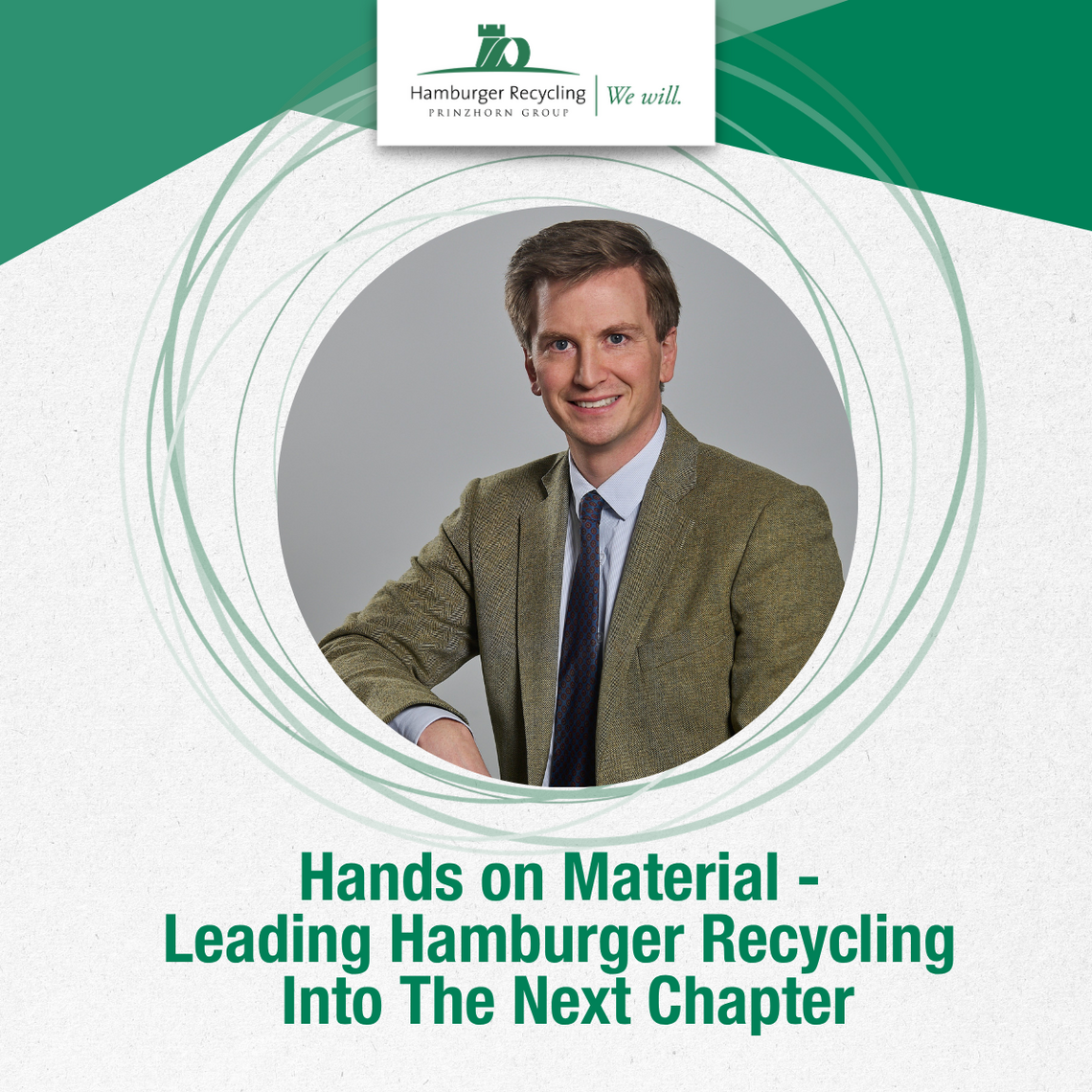
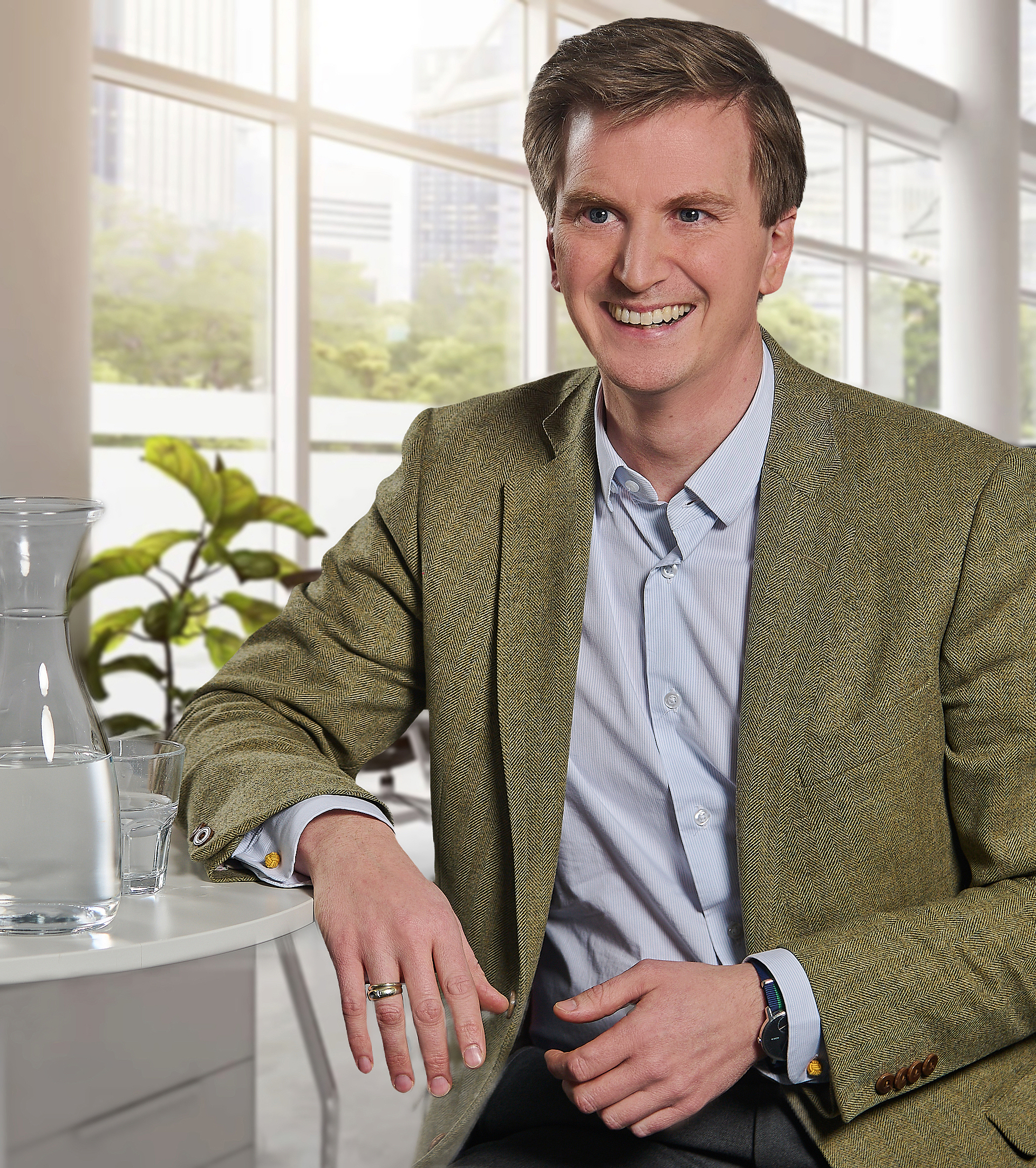
- Hands on Material: Sandor Rudnay on Leading Hamburger Recycling into The Next Chapter
Hands on Material: Sandor Rudnay on Leading Hamburger Recycling into The Next Chapter
THE JOURNEY
From Consulting to Recycling
Sandor Rudnay’s path to leading one of Europe’s most active recycling divisions is not a straight line. It begins, perhaps unexpectedly, in corporate finance.
You have spent nearly 12 years within Prinzhorn Group watching the Recycling Division grow from the inside. What drew you to this industry in the first place, and how has your answer to that question changed over the years?
Even during my studies, I was always interested in the manufacturing industry. What matters to me most is working on something tangible and having a clear sense of value chain. Even so, my first job was at an international consulting firm in corporate finance. There I learned a lot about different industries and was able to build up a great deal of theoretical knowledge. But consulting was never quite enough for me. What bothered me most was that I could only ever be part of a company for a short time and never really see the true outcome of my work.
In my initial degree in strategic management, I was missing the technical foundation. That is why I decided to pursue an additional technical degree in England. After that, it was clear to me that I wanted to find my path in industry. The opportunity at Prinzhorn was very attractive to me. In the first years, I was able to get to know our value creation across all divisions. A decisive factor in why I started in the Prinzhorn Group and specifically in Hamburger Recycling was the people. In particular, Cord Prinzhorn and Andreas Walser placed their trust in me and strongly supported my development, combined with the opportunities that opened up along the way. I am grateful to be part of an organization where colleagues respect each other, where you can laugh together, and where everyone works toward a common goal.
Twelve years later, his answer to the question of what drew him here has not fundamentally changed. But it has expanded.
Today, the waste management business in Europe continues to grow in importance. Many opportunities are emerging, and thanks to an owner who places trust in us, we are able to seize them.
“ Through logistics, collection, and other services, we are strongly anchored in the market, and we are continuously working to further build on this strength and secure raw materials for our value creation.”
In addition, we have evolved from a pure recovered paper organization into a broadly positioned waste management company for non-hazardous waste, leveraging our network. I am extremely grateful to be part of the Prinzhorn Group and to be able to actively help shape the development of the Recycling Division.
THE TRANSITION
Following a Strong Predecessor
Andreas Walser built Hamburger Recycling into the organization it is today, establishing its regional structure, its management culture, and its strategic direction. Taking over from someone who leaves a strong foundation is its own kind of challenge, one that requires clarity about what to preserve and where to push further.
How do you approach that kind of transition, and where do you see the next layer of development for the division?
Andreas managed to put the division on a very broad and stable footing. Across the entire division, we have a strong management team that is deeply rooted in the market and able to leverage local market conditions effectively. The strategy has been continuously developed within the divisional management over the past years, and we will continue to challenge and refine it together with the existing management team.
As part of the handover, we positioned ourselves appropriately with regard to the challenges ahead. I see no need to change the successful path Andreas has taken. At the same time, we will continue to regularly review our direction, both internally and externally, to ensure it remains the right one and adjust it where necessary.
That posture, of building on strength rather than reinventing for its own sake, runs throughout Rudnay’s thinking. It is the kind of leadership that is easy to undervalue and difficult to execute well.
PEOPLE AND CULTURE
A People Business, in Every Sense of the Word
What is the one thing about running a recycling business that people consistently underestimate?
Recycling is absolutely a people business. The recycling business operates on a very personal level, where human connections and the building of trust are essential for long-term business relationships. Employees also have an extremely strong impact on a company’s success. You can have the right equipment and structures in place, but motivated and efficient employees ultimately make the difference between success and failure. Solid assets and well-located sites, however, remain the foundation that enables motivated employees to perform successfully.
Managing over 1,000 people across 13 countries means that staying connected to what is actually happening on the ground is not automatic. It requires deliberate choices about structure and presence.
How do you stay genuinely connected to what is happening at depot and plant level, and why does that matter to you personally?
It has always been important to me to understand our business in depth and not to make decisions from an ivory tower. That is why I make a point of regularly visiting our depots. We have had repeated discussions about whether to introduce a functional structure that could deliver synergies and expertise across the division. Ultimately, we have consistently opted for a matrix organization, because we are convinced that a regional structure enables closer contact with the countries and with people on the ground, allowing us to better represent their interests at divisional level. In addition, we actively seek feedback from all employees through surveys, so we can address ideas for improving working conditions or processes.
I care deeply that our core values genuinely represent who we are, rather than merely serving as marketing slogans. Therefore, our goal is to take our colleagues’ input seriously and act on it, in order to ensure an engaging and positive workplace where our employees can perform at a high level over the long term.
"You can have the right equipment and structures in place, but motivated and efficient employees ultimately make the difference between success and failure."
On safety, he is equally direct. It is a topic he frames not as a compliance matter but as a cultural one.
What does good safety culture look like when it is working, and how do you build it across such a geographically spread organization?
The safety of our employees is a very high priority for us. Two years ago, we began establishing divisional standards through the Health and Safety Directive. An important foundation for this was the Blue Collar Survey conducted at that time, along with the related investments in workwear and social facilities. Today, this serves as our minimum standard. However, we want to go beyond that and further raise the bar with the Health and Safety Policy that is currently being developed.
That said, it is not just about rules or investments, those can only provide the foundation. What truly matters is a change in culture. Everyone within our organization, as well as anyone who comes to our sites, must comply with the established rules and is also encouraged to propose improvements that we can roll out across our locations. We must follow the rules, so that it becomes the new normality. In this way, we create a shared corporate identity and a collective commitment to continuously improving safety.
When it comes to who thrives in this environment, Rudnay’s answer reflects the same values.
What kind of people thrive in this industry, and what do you look for when you are building a team?
I believe that people who want to make a difference are exactly right for us. We have many ideas that relate to an industry which is constantly evolving, driven both by regulatory change and market dynamics. In my interviews, I often hear candidates say that they see a clear purpose in what we do, and that this resonates with them. Furthermore, we are always looking for candidates who fit well into the team. That means critical thinkers who, together with their colleagues, are committed to pursuing and delivering on our strategic objectives.
STRATEGY
The First Year, and the Years That Follow
2026 is Sandor Rudnay’s first full year leading the division. His priorities for that year are not a list of initiatives. They are a philosophy of leadership.
What are the two or three things you are most focused on getting right in 2026, and why those specifically?
My goal is to challenge my colleagues’ ideas, represent them on our Group board, and actively fight for their realisation. Beyond that, it is my responsibility to bring the Group’s topics into my division and promote them as effectively as possible. Another focus is on collaboration with our sister divisions. With the Packaging Division, we aim to bundle commercial activities and present a unified front in the market. With the Containerboard Division, we share the goal of ensuring optimal supply of raw materials.
The number that gives this strategy its fullest context: Hamburger Recycling processed 2.6 million tonnes of secondary raw materials in 2025. Growth at that scale requires not just ambition but a clear sense of where the next opportunity lies.
As you look at the markets where the division still has room to grow, which regions or opportunities are you watching most closely?
Paper for Recycling is our primary focus. Our aim is to strengthen our access to the market, which we refer to as ‘hands-on material.’ Our objective is to offer a broad portfolio of services to the market. Therefore, we provide a range of waste management services for non-hazardous waste. Our growth clearly lies in collection activities, through which we will continue to further strengthen this position.
How do you think about the balance between organic growth, greenfield expansion, and acquisition as paths forward?
Our strategy clearly defines growth as a key priority. One of our objectives is certainly to increase the level of integration in order to become more independent of market fluctuations. This strategy also includes the development of new sites, which we plan to implement. It is always important to us to first develop the appropriate structure together with the local management, so that we are well prepared for future projects. Performance is one of our core values as a Prinzhorn Group and gives us strong perspective for the future. I am grateful to have an owner who trusts us and is willing to continue investing in our division so that we can further grow.
RAW MATERIALS AND TECHNOLOGY
The Supply Question and the Technology Answer
One of the structural tensions running through the European recycling industry right now is the gap between containerboard capacity, which expanded significantly during the COVID period, and the availability of Paper for Recycling, which has not kept pace. Rudnay addresses this directly.
How serious is that supply gap, and what is Hamburger Recycling’s answer to it?
The containerboard industry in Europe experienced a strong boost during the COVID period. Combined with the decline in demand for graphic paper, some paper producers decided to build additional capacities or convert former graphic paper machines. Since COVID, however, demand for packaging paper has declined again, resulting in overcapacities in the market.
At Hamburger Recycling, we are convinced that competition for Paper for Recycling in Europe will remain intense in the coming years. Through our proximity to the market and continued investment in collection, we are able to ensure secure access to this key raw material.
On the question of where competitive advantage will come from over the next five years, he resists any simple answer.
How much of Hamburger Recycling’s competitive advantage will come from technology, and how much from people, relationships, and local market knowledge?
I believe that our business will continue to depend primarily on the right people. As part of our activities in collection and sorting plants, in which we will continue to invest, these facilities will also be expanded, with corresponding investments in technology to increase automation and sorting depth. So it will be a combination and can only go hand in hand.
Material quality is the other side of this equation. As primary fibres have gradually been replaced by secondary fibres in paper production, and as composite packaging materials have become more common, the quality of Paper for Recycling entering the market has come under pressure.
Where is the biggest quality loss happening in the value chain today, and where can Hamburger Recycling have the most influence?
In recent years, primary fibre capacities have gradually been replaced by secondary fibre capacities in the paper industry. As a result, the share of primary fibres in Paper for Recycling has declined. At the same time, composite materials made from paper and plastic are increasingly being used in the packaging industry. This development leads to a decline in the quality of Paper for Recycling. Across Europe, we must work through our industry associations and with the public to promote clean paper for recycling streams. This is where legislation gives us the greatest ability to exert influence.
"Across Europe, we must work through our industry associations and with the public to promote clean paper for recycling streams."
REGULATION AND THE BIGGER PICTURE
PPWR, EPR, and the Regulation That Feels Personal
Few industries are as directly shaped by regulation as recycling. The current landscape, spanning the Packaging and Packaging Waste Regulation, Extended Producer Responsibility frameworks, the Green Deal, and the rise of e-commerce, is reshaping how the business operates at every level. Rudnay has a clear view of which of these will matter most in the near term.
If you had to pick one regulatory driver that will most significantly change how Hamburger Recycling operates over the next three years, which would it be and why?
E-commerce was certainly the biggest driver during the COVID period. Although local retail has regained importance, e-commerce continues to have a significant impact on our industry. The Green Deal encompasses a wide range of EU initiatives related to ESG. Even though recent delays have been announced, ESG-related topics will continue to accompany us, and we consider ourselves well prepared in this area. With regard to EPR, there are different interpretations across European countries. Depending on how far these systems are taken, EPR schemes can have a material impact on our business. I believe that over the next three years, the PPWR will have the most immediate impact on our business, particularly through packaging reduction requirements and recycling targets.
On textile recycling, his answer moves from strategic to personal in a way that is worth noting.
The EU textile regulation is opening a new waste stream for the recycling industry. Is that a natural extension of existing capabilities for Hamburger Recycling, or does it require building something genuinely new?
Textile recycling is a very personal concern of mine. I find it evidently shocking how many textiles that are still in good condition are being discarded. I see this waste as a major problem for both industry and society. Nevertheless, in most countries we do not see synergies with our other waste management activities. In some countries, however, it does make sense to offer textile collection and sorting as an additional service.
PURPOSE
The Part Where Commerce and Conscience Meet
The question of how to hold environmental purpose and commercial reality together is one that leaders in this industry are asked often. Most give an answer that sounds like balance. Rudnay’s answer is different.
The recycling industry sits at the intersection of environmental impact and commercial reality. How do you hold those two things together when they pull in different directions?
Honestly, I do not see a contradiction in this. Through value-creating activities, we are able to make a contribution to the environment and to society as a whole. This creates a shared sense of purpose.
It is a short answer, and it is the better for being so. The tension that the question assumes, the trade-off between doing well commercially and doing good environmentally, is one that Hamburger Recycling’s business model is specifically designed to dissolve. Recycling more material more efficiently is simultaneously the commercial objective and the environmental one.
He closes on the question of what the division should look like in five years with the same combination of ambition and groundedness that characterizes the rest of the conversation.
What would you like Hamburger Recycling to look like in five years, and what needs to go right for that to happen?
We have a clear strategy that extends beyond the next five years. Although our strategy has always been ambitious, we have so far managed to exceed our plans. Decisions we make today often only begin to take effect after two to three years. I hope that our decisions will continue to prove effective and that, in five years’ time, we will see ourselves further validated by our strategy and our plan.
Hands on Material.
It is the phrase that appears on Hamburger Recycling’s materials, in its communications, and now, in the way its new Managing Director describes the business he is leading. It is not a slogan about recycling in the abstract. It is a statement about proximity: to the market, to the material, to the people who collect and sort and process it every day across 13 countries.
Sandor Rudnay has been close to this business for nearly 12 years. The next chapter, by his own account, is one he is not just ready for but genuinely looking forward to.
Robert Polster (photo credit)